Why Timber Remains the Right Choice at the High End
For many building types, steel doorsets are the practical answer but in spaces where the doorset is part of the architectural experience, timber has qualities that steel cannot replicate.
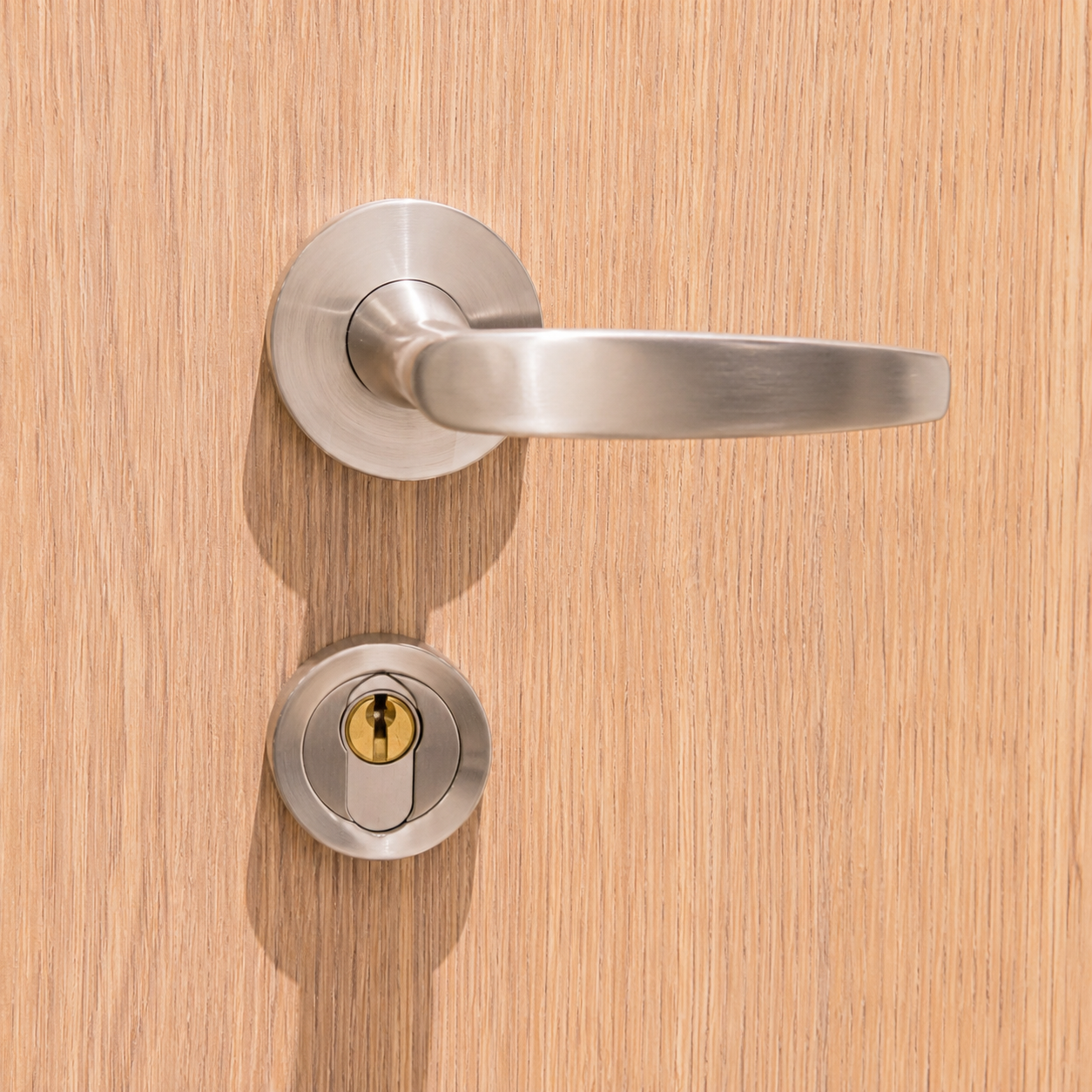
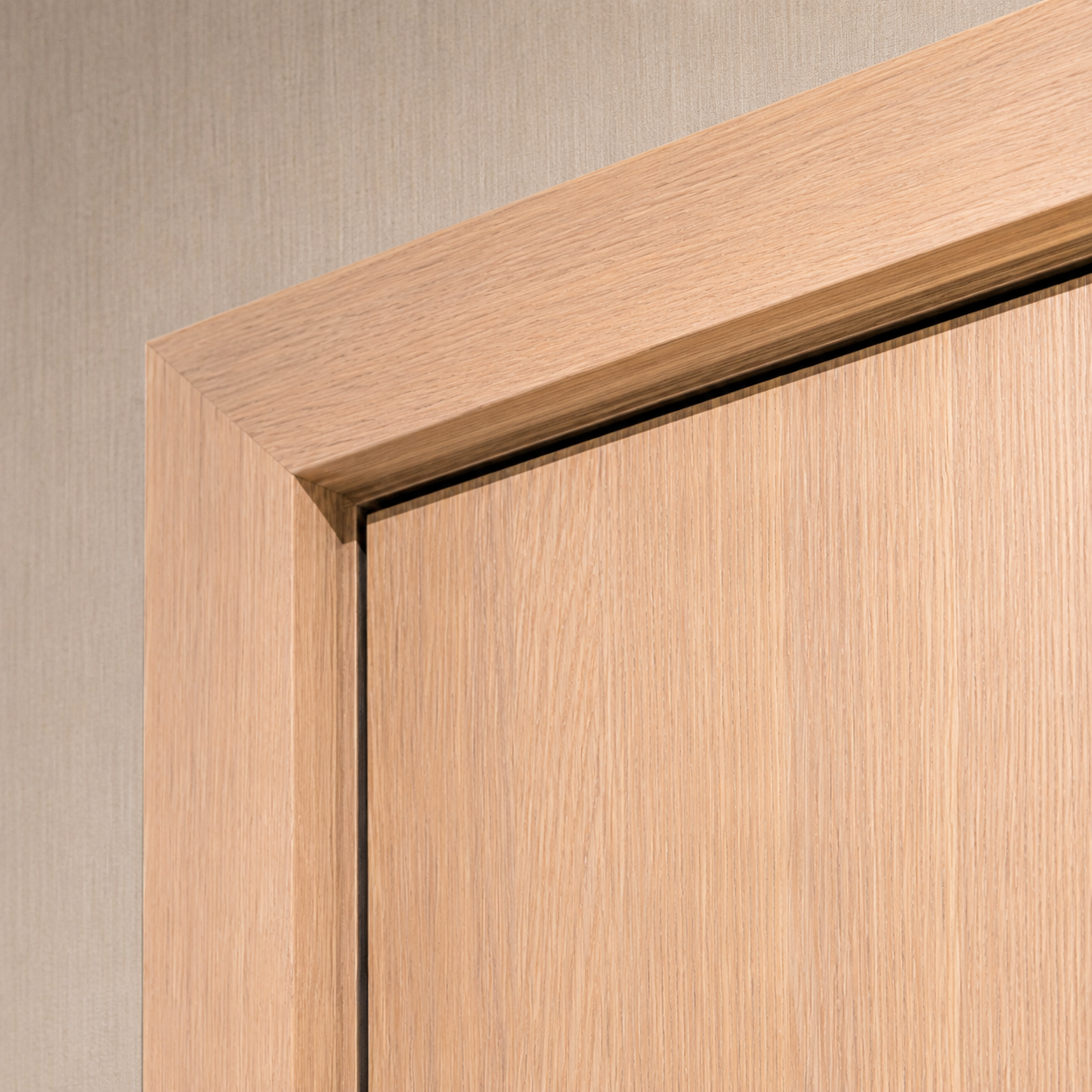
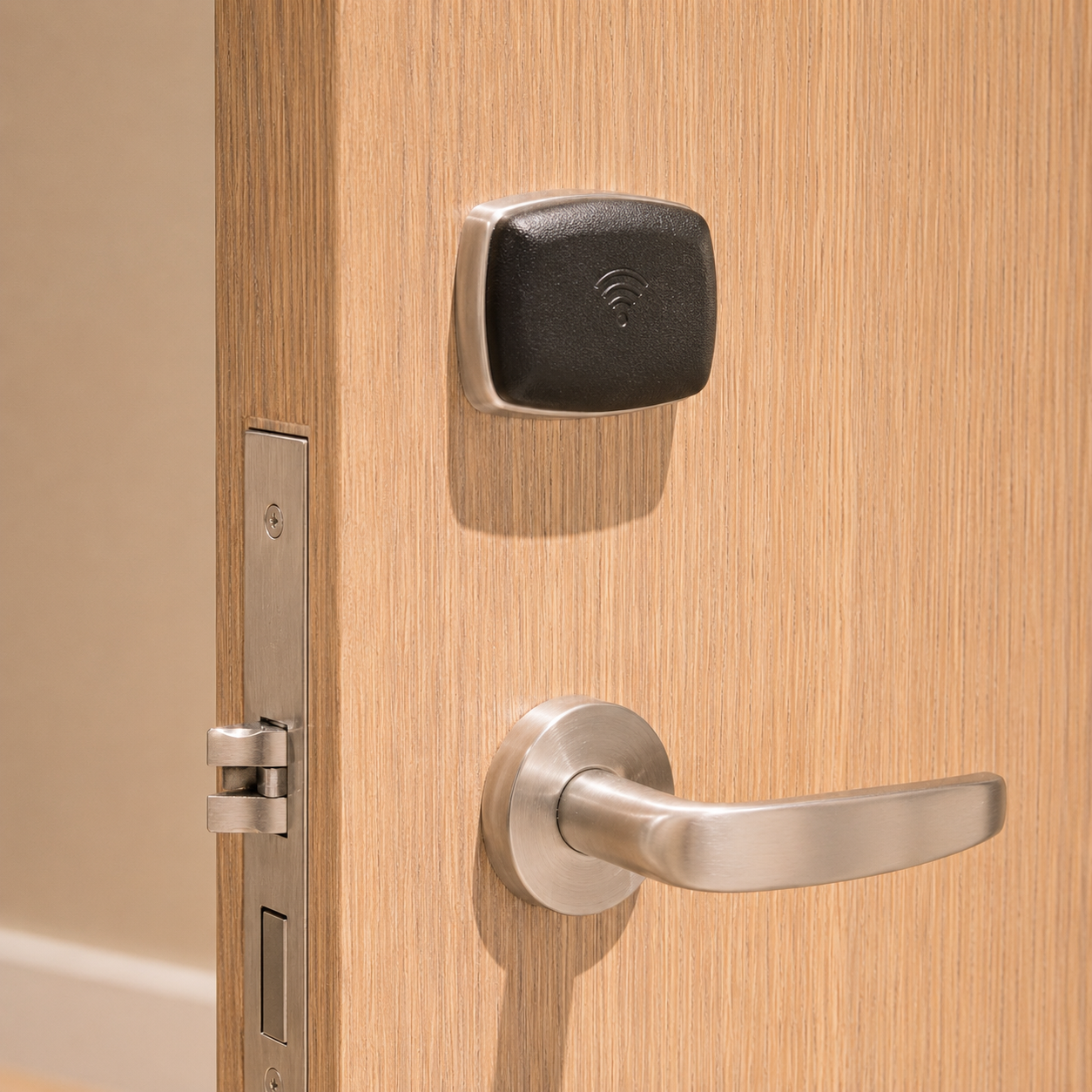
Timber offers warmth, tactility, and a natural finish that integrates with high-end interiors in a way that few other materials do. It can be veneered, stained, painted, or finished to match adjacent joinery giving specifiers complete flexibility to align the doorset with the wider design intent, whether that means exposing the natural grain or delivering a flawless painted finish in a bespoke colour. It can also be crafted to fine tolerances, allowing seamless integration with panelled walls, concealed frames, and bespoke ironmongery.
For architects and interior designers working on projects where the threshold experience matters, where the door is meant to be seen and felt, not just used timber remains the material of choice.
Fire Performance in a Timber Doorset
The starting point for any wooden fire door specification is understanding what fire performance actually means. Fire-rated timber doorsets are tested to BS EN 1634-1 and classified in minutes of integrity (E) or integrity plus insulation (EI). QuietStar’s timber doorsets are available in EI30 and EI60 ratings (30 and 60 minutes of integrity and insulation respectively) subject to the acoustic specification required.
Critically, a fire-rated timber doorset must be tested and certified as a complete assembly. The leaf, frame, intumescent seals, hinges, and hardware are all part of the tested system. Substituting components, even seemingly minor items like a different closer or handle, can invalidate the certification.
Third-party certification under schemes such as Certifire is now the expected standard, not an optional extra. Under the Building Safety Act 2022 and revised Approved Document B, duty holders ( architects, contractors, and building owners) are required to demonstrate that the products specified are tested, certified, and installed correctly. Documentation and traceability are scrutinised at handover and throughout the building’s operational life.
Acoustic Performance: Where Timber Doors Really Earn Their Place
Timber’s acoustic properties are what make it particularly suited to high-end spaces. A well-engineered timber doorset can deliver acoustic ratings from Rw 30dB up to Rw 46dB – sufficient for the vast majority of hospitality, cultural, and residential applications, and comparable to many steel equivalents at typical commercial ratings.
Achieving strong acoustic performance in a timber doorset depends on several factors: leaf construction (typically a solid core or engineered composite), the quality of the perimeter seals, the threshold treatment, and how the door interacts with the surrounding wall build-up. As with fire performance, installed acoustic performance (R’w) is always somewhat lower than the lab rating (Rw), and thoughtful detailing at the junctions makes a measurable difference.
For most high-end applications, an acoustic timber doorset in the range of Rw 35–42dB will deliver excellent real-world performance enough to significantly reduce speech transmission between rooms, provide privacy in hotel accommodation, and separate performance spaces from adjacent circulation.
What to Get Right When Specifying
If you’re specifying wooden fire doors on a project where acoustic performance matters, a few things will make the process significantly smoother:
- Choose a doorset that has been tested and certified as a complete assembly for both fire and acoustic performance, not components pieced together
- Request full documentation up front: test certificates, product data, and evidence of third-party certification
- Consider the surrounding wall build-up and threshold detail early, installed acoustic performance depends on them as much as on the door itself
- Be clear about the finish specification and any bespoke veneers or joinery integration required as this affects lead times and, in some cases, fire certification pathways
- Engage a specialist supplier early, ideally at RIBA Stage 3 or 4, when the doorset can still be integrated into the wider design
Explore QuietStar timber doors
Acoustic and fire-rated timber doorsets engineered for high-end architectural, hospitality, cultural, and residential applications. View the full door range or get in touch with our doors and glazed screens specialist directly today.
Related Services
Learn more about QuietStar’s audiology room design services and how we can support your next project.
Need help with a refurbishment? Explore our audiology room upgrades and acoustic treatment solutions.