Why Use the Decibel?
A decibel (dB) is a logarithmic unit used to express the difference between two values of power. Decibels are used to describe many things that are easier to represent logarithmically, not just acoustics. In acoustics, we can use it to describe sound power levels (dB Lw) and sound pressure levels (dB Lp), as well as the reduction in level offered by a building element such as a door, window, floor, or wall.
Because it’s logarithmic rather than linear, the numbers behave differently from what you might intuitively expect. For example:
- Doubling the sound pressure (in Pascals) will increase the sound pressure level (dB Lp) by 6dB.
- Doubling the sound power or energy (in Watts) will increase the sound power level (dB Lw) by 3dB.
- Adding two equivalent source levels together for example, 83 dB Lp and 83 dB Lp will increase the total by 3dB, to give 86 dB.
When applied to acoustic doors and building elements, dB doesn’t describe a signal level, it describes how much sound the element blocks. This is expressed as the Sound Reduction (R), which is the logarithmic ratio of the sound power on one side of the test element to the sound power transmitted to the other side. Because we’re comparing two values of power, the decibel is the natural unit to use.
A door rated at 42dB reduces the sound level passing through it by approximately 42 decibels. In practical terms, a normal conversation on one side (around 60–65dB) will be significantly reduced on the other side of a well-sealed 42dB doorset.
Key Ratings You’ll See on a Datasheet
Rw – Weighted Sound Reduction Index
Rw is the single most important number on an acoustic door datasheet. It’s a single-figure rating that summarises how well the product reduces sound transmission across the human hearing range, tested in laboratory conditions to BS EN ISO 10140. It’s the number most manufacturers use as headline performance, for example, “Rw 42dB.”
Rw is a laboratory value. It tells you what the door achieved in a controlled test environment, on a test rig, with ideal sealing conditions.
R’w – Weighted Apparent Sound Reduction Index
R’w is the equivalent measurement made in-situ, once the door has been installed in a real building. It accounts for all the real-world factors that reduce acoustic performance.
R’w is almost always lower than Rw. A door with a lab-tested Rw of 42dB will typically deliver an installed R’w of 35–38dB depending on the surrounding conditions.
What’s a “Good” Number for Your Application?
There’s no universal answer, the right rating depends entirely on the acoustic environment on either side of the door. As a broad guide for typical applications:
- Rw 30–35dB: general office partitioning, meeting rooms where confidentiality isn’t critical, standard residential
- Rw 35–42dB: hotel bedrooms, private offices, standard clinical rooms, music practice rooms in schools
- Rw 42–48dB: audiology rooms, boardrooms, higher-specification hospitality, sensitive clinical environments
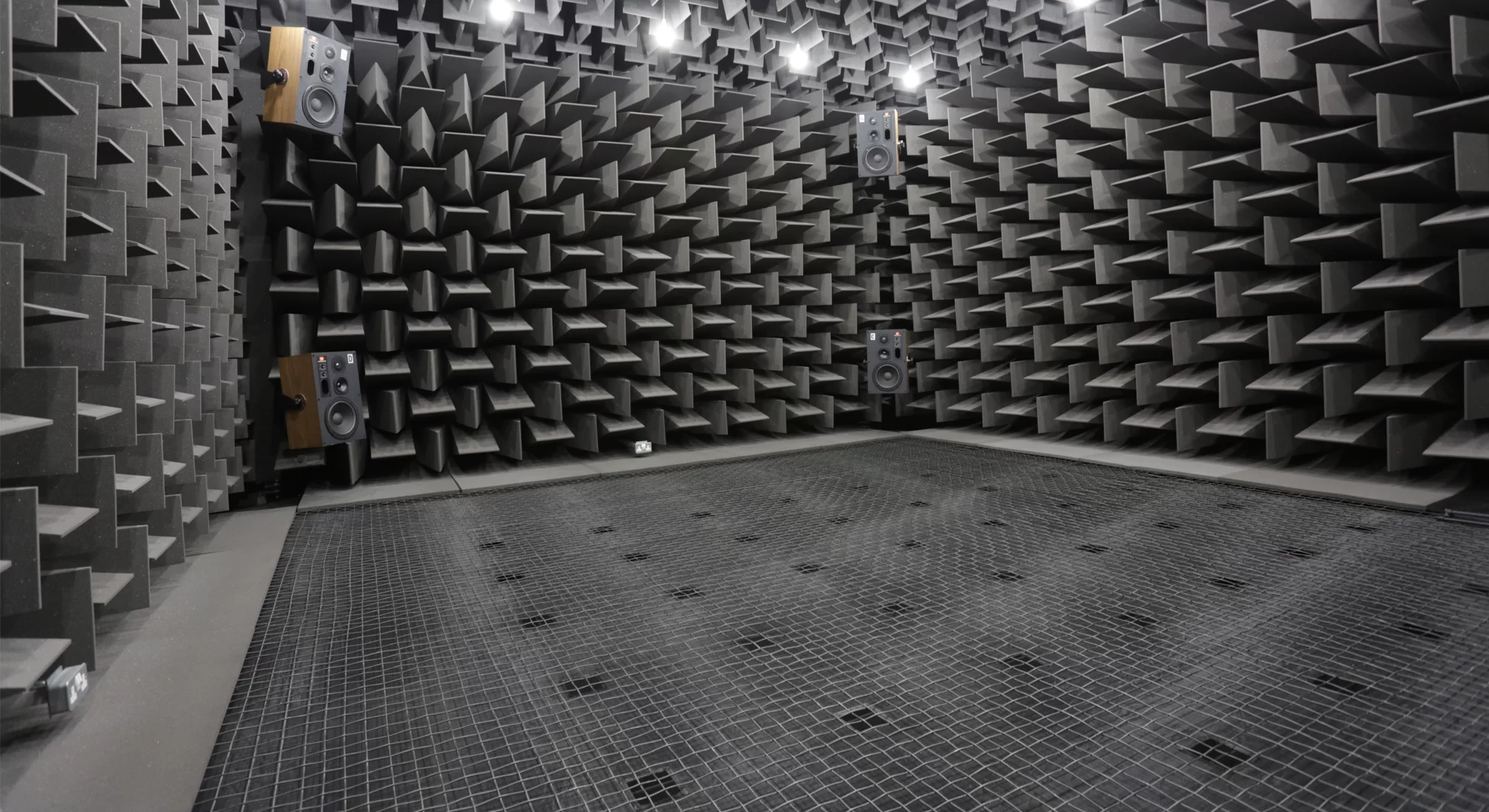
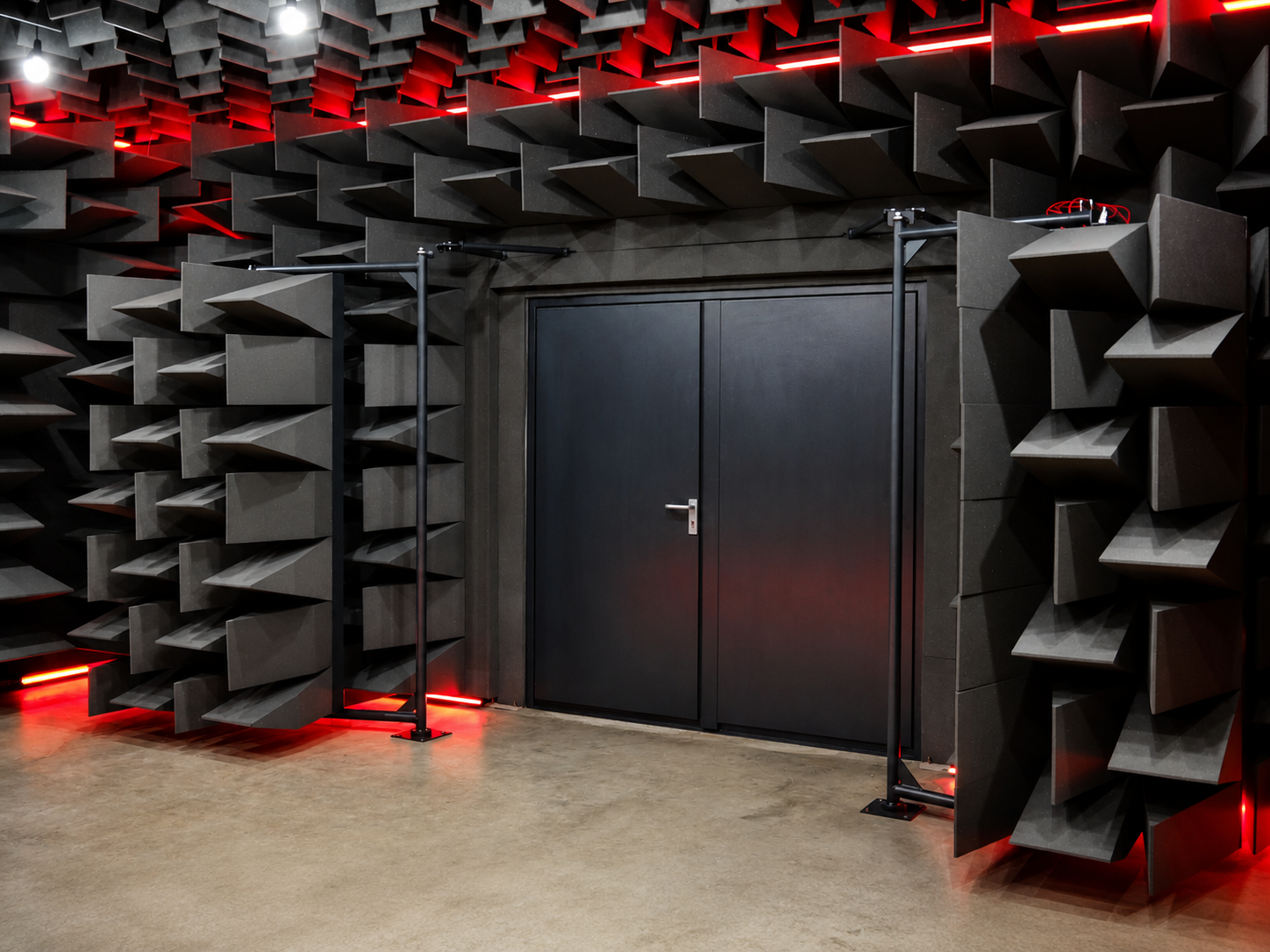
- Rw 48–56dB: recording studios, broadcast environments, anechoic chamber entrances, high-security or high-privacy environments
These are guidelines rather than rules. An acoustic consultant will typically specify the required values based on the actual noise environment, room use, and the acoustic quality of the surrounding construction.
The Practical Takeaway
Acoustic ratings are precise measurements, but they need to be read in context. The headline Rw number on a datasheet is useful for comparing products but the number that matters in the finished building is the installed R’w, and that depends on everything around the door as much as on the door itself.
When specifying acoustic doorsets or audiology rooms, the surest way to achieve the performance you want is to engage a specialist supplier early, share the acoustic requirements up front, and consider the full opening as an assembly not just the door in isolation.
Speak to QuietStar about your acoustic requirements
Acoustic doorsets, audiology rooms, and testing facilities engineered to deliver certified installed performance, not just laboratory ratings.
View our door range at quietstar.co.uk/services/doors/ or our audiology rooms and booths at quietstar.co.uk/services/acoustic-rooms/.
Or speak to our team on 0333 444 0458.
Related Services
Learn more about QuietStar’s audiology room design services and how we can support your next project.
Need help with a refurbishment? Explore our audiology room upgrades and acoustic treatment solutions.