

Other Testing Facilities

Acoustic Test Facilities for Precision Engineering and Research
QuietStar provides a wide range of bespoke acoustic test environments designed for precise, repeatable measurements across multiple industries. These facilities support everything from mechanical durability testing to psychoacoustic studies and subjective sound quality evaluation.
Our custom-designed rooms include:
Modal Analysis Rooms for structural vibration testing
Shake & Rattle Chambers for mechanical endurance and buzz, squeak & rattle testing
Damping Material Labs for acoustic absorption and transmission loss evaluation
Quiet Rooms for ultra-low background noise measurements
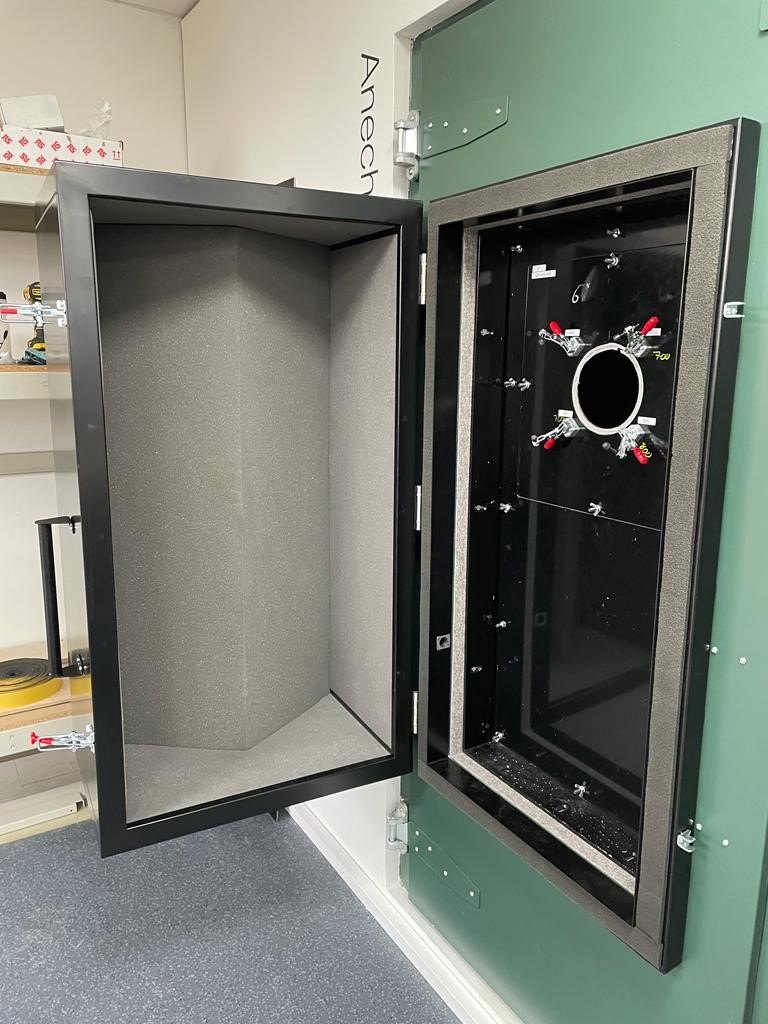
Component Test Labs for small-scale acoustic validation
Sound Quality Rooms for subjective evaluation in controlled conditions
Listening and Psychoacoustic Rooms for perception-based sound testing
We also build custom acoustic enclosures, test boxes, and hybrid rooms to meet highly specific requirements.
Each facility is carefully engineered for the intended test type, with consideration for environmental control, isolation, and operator usability. Supporting systems such as mechanical isolation, silent ventilation, climate control, and integrated monitoring are included as needed to ensure reliable data and safe operation.
Optimised Design for Testing
Semi-anechoic chambers feature a flat floor, making them ideal for testing large or heavy equipment without the need for specialised flooring. This allows for easier access and precise positioning during measurements.
Essential Facility Requirements
These chambers incorporate critical systems such as silent ventilation, fuel supply, and extraction mechanisms to ensure safe, efficient operation while maintaining stable testing conditions.
High-Accuracy Measurement Capabilities
Despite having a partially reflective floor, semi-anechoic chambers enable highly precise acoustic measurements. They provide a reliable testing environment for various industries, ensuring accurate and repeatable results.


More About Acoustic Testing and Applications
Modal Analysis Room
A modal analysis room is used to determine the vibrational characteristics of a vehicle’s structure, including body-in-white, trimmed body, cabin cavity, and individual components. This process identifies natural frequencies, deformation patterns, and vibration tendencies, helping engineers optimise design and improve passenger comfort.
Key applications include:
- Design verification – Assessing the impact of structural changes on vibration behaviour
- Hot spot identification – Pinpointing areas of excessive vibration
- Passenger comfort correlation – Linking vehicle modal response to perceived vibration levels
- Noise and vibration path analysis – Tracing sound and vibration transmission from sources (powertrain, wheels, aerodynamic noise) to occupants
- Intervention planning – Identifying the most effective areas to prevent noise propagation
- Panel contribution analysis – Evaluating the role of different body panels in overall noise and vibration
- Simulation validation – Tuning and verifying predictive models
- Scanning laser vibrometry – Capturing detailed surface vibration data
This controlled environment allows for precise measurements and analysis, ensuring vehicles meet performance, comfort, and noise reduction targets.
Shake, Rattle, and Damping Material Labs
Shake and rattle or damping material labs are used to assess body sealing, damping performance, and noise reduction in vehicles. Key applications include:
- Leakproof and tightness evaluation using ultrasonic detectors, smoke tests, and endoscopes
- Testing and application of insulation, damping, and absorbing materials
- Acoustic treatment analysis, measuring absorption and insulation properties
- Squeak and rattle testing to identify and eliminate unwanted noises
- Standalone material testing using impedance tubes and in-vehicle application
These labs are typically 10m long × 7m wide × 3.5m high, providing a controlled environment for accurate assessment and refinement of noise and vibration solutions.
Quiet rooms or component labs are used for Noise, Vibration, and Harshness (NVH) testing of vehicle substructures and components. These facilities provide a controlled acoustic environment for precise assessments, including:
- NVH analysis of HVAC systems, seats, wipers, windows, starter motors, alternators, and other components
- Door slam noise measurement to evaluate sound quality and durability
- Leak detection using ultrasonic sensors, smoke tests, and endoscopes to assess tightness and sealing
These labs ensure components meet stringent noise and vibration performance standards before full vehicle integration.
Sound Quality, Listening & Psychoacoustic Rooms
Acoustic rooms provide a controlled environment for detailed sound quality evaluation. These spaces are designed for:
- Sound quality analysis to assess tonal balance and clarity
- Jury evaluations for subjective listening tests
- Artificial head psychoacoustic measurements to simulate human hearing perception
- Preparation and evaluation of subjective listening tests
These isolated structures, typically 8.0m × 5.0m × 3.0m high, ensure accurate and repeatable assessments for research and product development.