Why Anechoic Chambers Degrade Over Time
The performance of an anechoic chamber depends on a lot of quiet, unglamorous engineering working together. When any part of that engineering starts to underperform, the acoustic behaviour of the chamber begins to drift.
Several factors contribute to that drift:
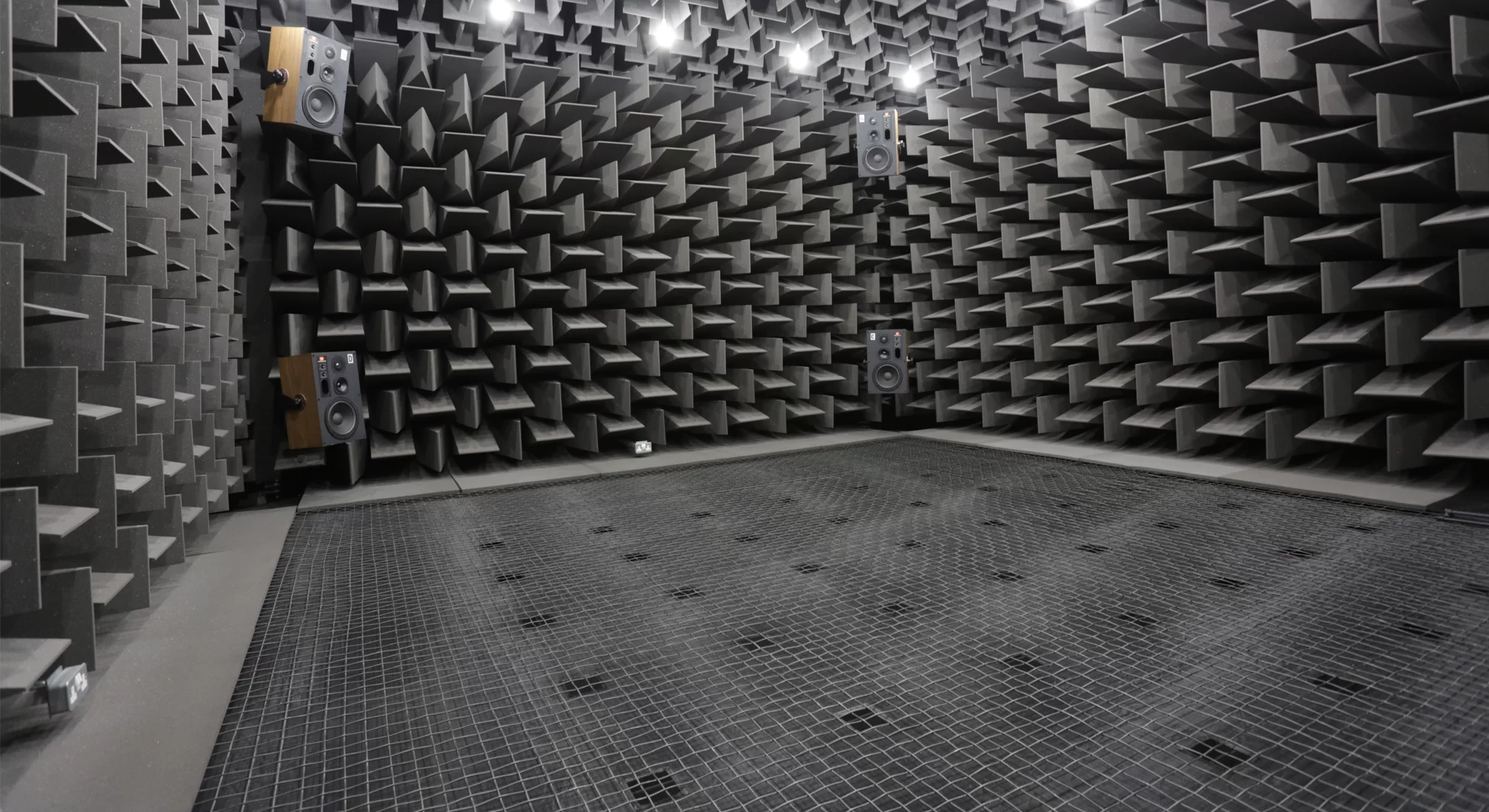
Wedge degradation. Acoustic wedges are the visible face of an anechoic chamber, and they take the brunt of the wear. Over years of use, wedges can compress, sag, discolour, or begin to shed fibres. In older chambers, materials that were state of the art at the time may have simply reached the end of their useful life. In some cases, historical wedge materials contain substances that would no longer be specified today.
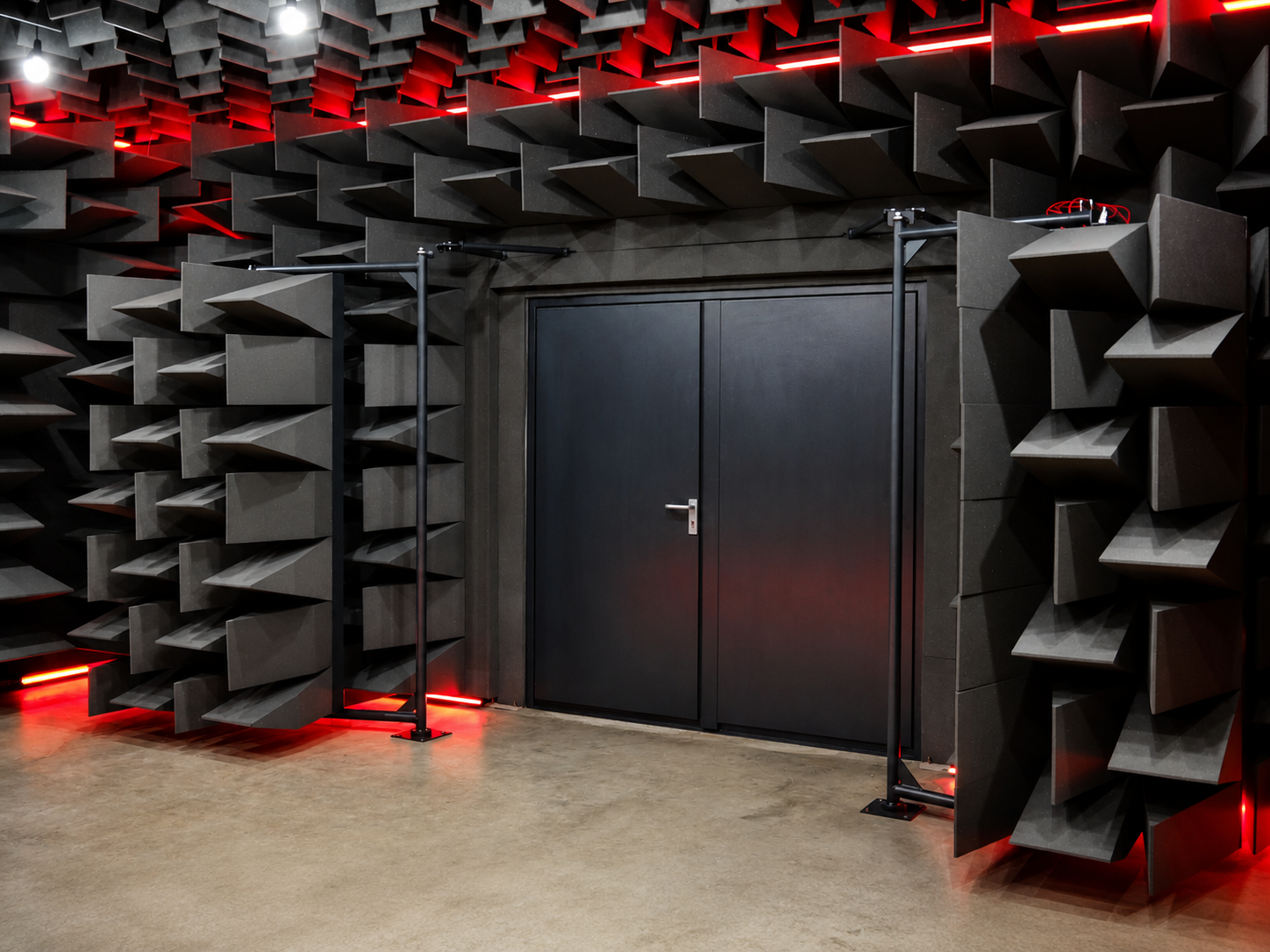
Seal and door failures. Acoustic doors carry a heavy load in a working chamber – they open, close, and reseal thousands of times over the facility’s life. Perimeter seals compress and lose their memory. Threshold details wear. Any weakness at the door opening can compromise the acoustic isolation of the entire chamber.
Building movement and settlement. Chambers are room-in-room constructions, decoupled from the surrounding building. Over years, the structural relationship between the inner and outer shells can shift through building settlement, vibration, extension works to the surrounding structure, or the addition of adjacent plant.
Environmental changes outside the chamber. A chamber that was quiet enough for its purpose when it was built can become inadequate over time if the surrounding environment changes. New plant equipment installed nearby, an extension built next door, or increased road or rail traffic can all raise the background noise floor to a point where the chamber no longer meets its original specification, even if the chamber itself hasn’t changed.
Changes in testing requirements. The chamber may still perform as it always did but the tests being carried out inside it may have changed. New standards, new measurement techniques, or new product categories can move the goalposts.
When Is It Worth Thinking About Refurbishment?
Refurbishment rarely announces itself with an obvious moment of failure. More often, it becomes worth considering when several softer indicators start to appear together.
When test results become inconsistent. If measurements that used to be repeatable are starting to drift, where the same test on the same equipment yields different results at different times, it’s worth investigating the chamber itself, not just the measurement setup.
When background noise floor rises. If the chamber’s measured background noise level has crept upward compared with its commissioning data, something in the chamber’s acoustic isolation is likely working less effectively than it did.
When the chamber can no longer meet the standards you need to test to. Testing standards evolve. A chamber that comfortably met the requirements of a 1990s standard may not meet the tighter tolerances of a modern equivalent, particularly at low frequencies.
When the wedges show visible deterioration. Sagging, compression, discolouration, damage, or fibre shedding are all worth taking seriously. Wedges that look tired often perform tired.
When something changes in the surrounding building. A new HVAC plant nearby, a construction project on the adjacent site, or a change of use in the surrounding building can all affect the chamber’s acoustic environment. It’s worth reassessing the facility after any significant change.
None of these on their own necessarily mean an immediate refurbishment but when they start to accumulate, they’re the point at which a specialist assessment is worthwhile.
Refurbish or Rebuild? How to Think About the Decision
For chambers that have reached the end of their original design life, the question sometimes shifts from “how do we refurbish?” to “should we refurbish, or rebuild?”
A few factors tend to drive that decision:
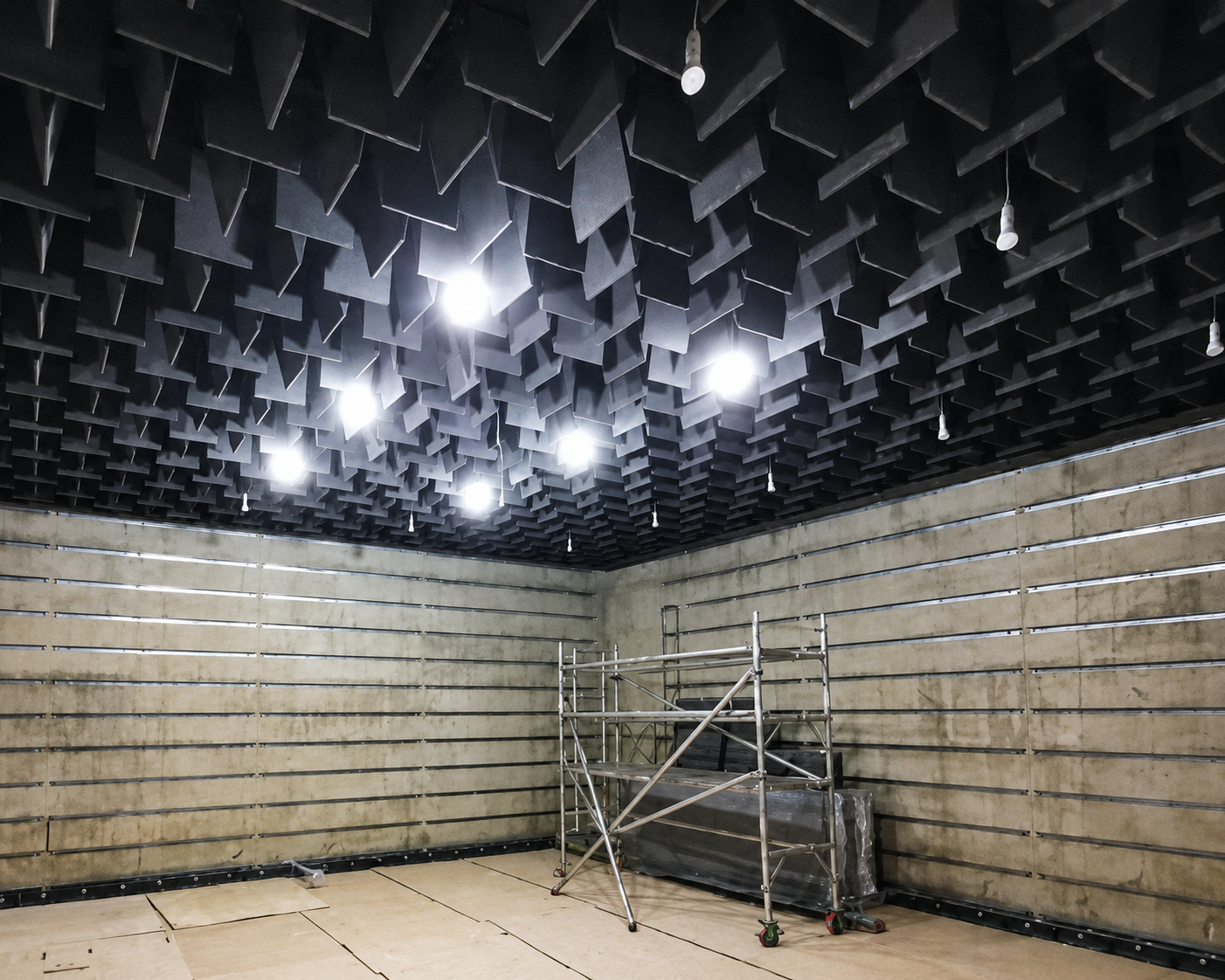
The condition of the shell. If the structural shell of the chamber is sound, refurbishment is almost always the more efficient route. If the shell itself has been compromised by movement, damage, or unresolved historic issues, a rebuild may become the better option.
How much the requirement has changed. A chamber that needs to meet substantially different testing standards, cover a wider frequency range, or accommodate different test subjects may benefit from being rebuilt to a modern specification rather than refurbished to something close to its original.
The disruption cost. A refurbishment can often be completed in stages, with the chamber taken out of service for a defined period. A rebuild is a longer disruption. For facilities where the chamber is central to ongoing product development, minimising downtime often points toward refurbishment.
Budget and timescale. Refurbishment is typically the more cost-effective route where it’s technically viable. Rebuilds involve fresh structural work, longer programmes, and higher costs.
For most established facilities, refurbishment is the right answer. The exceptions are usually where the original build no longer supports what the end user needs, or where the surrounding building has changed to the point where the chamber’s location is no longer viable.
Working With a Specialist
Anechoic chamber refurbishment is not a general acoustic project. It requires a supplier who understands how these facilities are built, what the original design was trying to achieve, and how to bring the chamber back to specification without introducing new problems in the process.
A good specialist will start with a proper survey, assessing the chamber against its original commissioning data, understanding how it’s used today, and identifying which elements of the facility are contributing to any performance shortfall. From there, a scope of works can be developed that addresses the actual problems rather than the visible symptoms.
Documentation matters. A well-run refurbishment project should end with a fully recommissioned chamber, updated performance data, and the paperwork the facility needs to demonstrate compliance to its own users, clients, and auditors.
In Summary
Anechoic chambers are built to last, but they aren’t permanent. Wedges age, seals wear, buildings shift, and testing requirements change. Refurbishment is one of the most cost-effective investments an organisation can make in an existing facility if it’s approached proactively, scoped properly, and delivered by a specialist who understands the discipline.
The best time to think about refurbishment is before performance becomes a problem. If your chamber has been in service for a decade or more, or if you’re starting to see any of the indicators above, an assessment is a low-commitment first step that can save significant cost and disruption later.
Refurbishing an anechoic chamber? Speak to QuietStar
QuietStar has decades of experience designing, building, and refurbishing anechoic and semi-anechoic chambers across the UK and internationally. From targeted wedge replacements through to full facility upgrades and relocations, we support R&D, defence, automotive, aerospace, and academic clients with pragmatic, well-documented refurbishment programmes.
View https://quietstar.co.uk/services/acoustic-testing-facilities/anechoic-refurbishment-repairs/ Or speak to our team on 0333 444 0458.
Related Services
Learn more about QuietStar’s audiology room design services and how we can support your next project.
Need help with a refurbishment? Explore our audiology room upgrades and acoustic treatment solutions.