A Stricter Specification Environment
The regulatory landscape for fire-rated and life-safety building products has shifted decisively. Recent reforms to building safety legislation have placed greater accountability to ensure that the products specified are tested, certified, and demonstrably fit for purpose.
For doorsets, this means several things in practice. Third-party certification under schemes such as Certifire is now the expected standard, not an optional extra. Fire-rated doors must be tested as complete assemblies rather than as individual components. Documentation and traceability are scrutinised more closely at handover and during the building’s operational life.
Smoke control, in particular, has become a focal point. Under updated regulations, the smoke leakage performance of doorsets is no longer an afterthought, it’s a measurable requirement for doors protecting escape routes, stair cores, and lobbies in multi-storey buildings. The standard reference here is BS EN 1634-3, with leakage tested in cold smoke conditions.
The net effect is that specifiers can no longer rely on legacy data sheets or assume that a generic fire door will pass scrutiny. The bar has risen, and the documentation expected to support every specification has risen with it.
Why Stainless Steel Is the Right Material for Modern Commercial Doorsets
Stainless steel has long been the material of choice for hygiene-critical and corrosion-sensitive environments. But its role in mainstream commercial specification is growing.
First, stainless steel offers exceptional longevity. Unlike powder-coated mild steel, which can chip, scratch, and discolour over time, a brushed stainless steel doorset will hold its appearance through decades of heavy commercial use. For high-traffic buildings like hospitals, transport hubs, education facilities, premium office developments, that durability translates directly into reduced lifecycle cost.
Second, the material accommodates a high level of acoustic, fire, and security performance without compromising on aesthetic intent. The same door can be specified to achieve Rw 42dB acoustic insulation, EI-60 minutes of fire integrity and insulation, certified smoke control, and RC3 security certification, while presenting a clean, contemporary finish that complements high-end architectural environments.
Third, stainless steel is a sustainable specification choice. It is fully recyclable at end of life, low-maintenance during operation, and contains a high proportion of recycled content from manufacture. For BREEAM-rated projects, this is a meaningful contribution.
Introducing the QuietLock® Stainless Steel Door
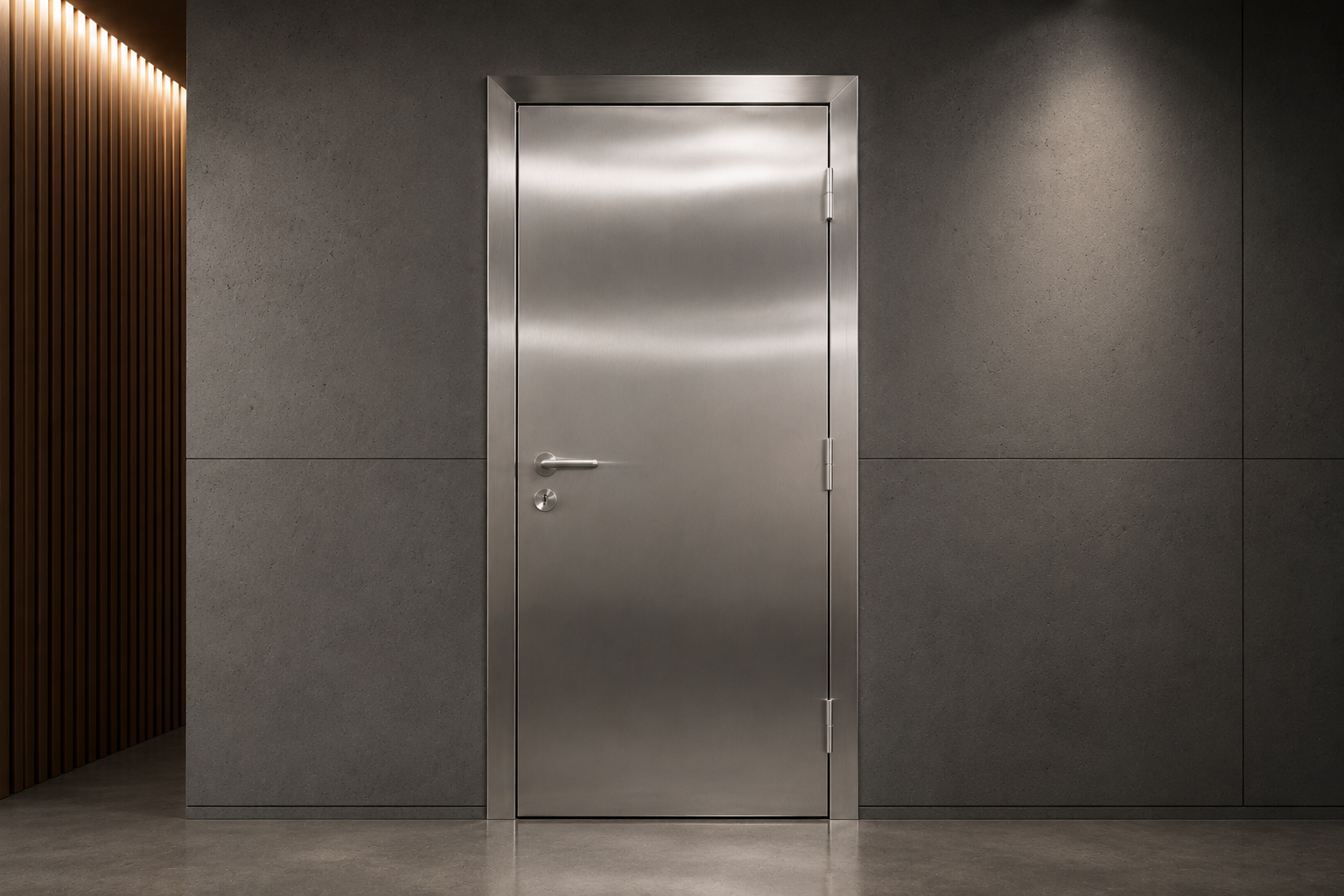
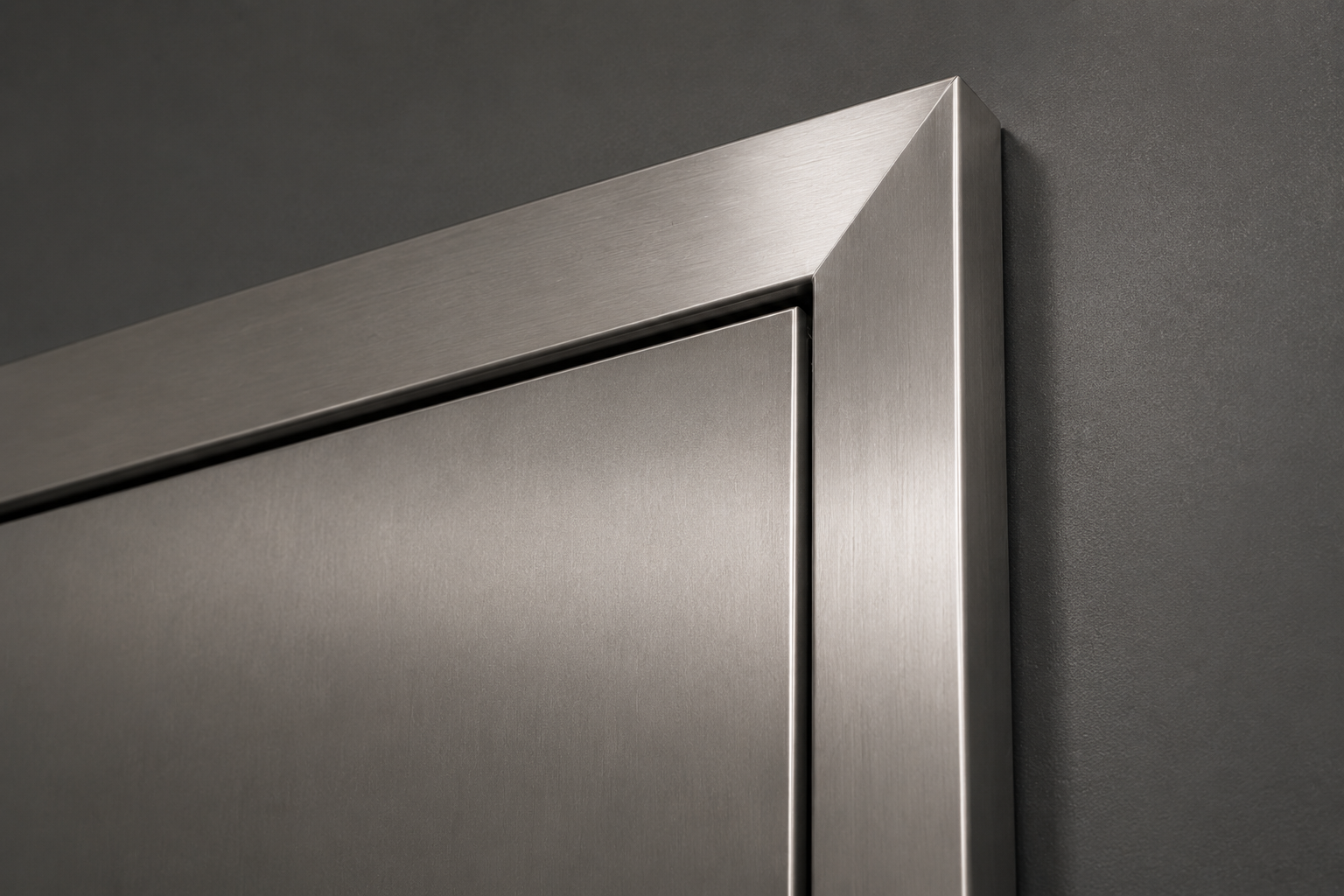
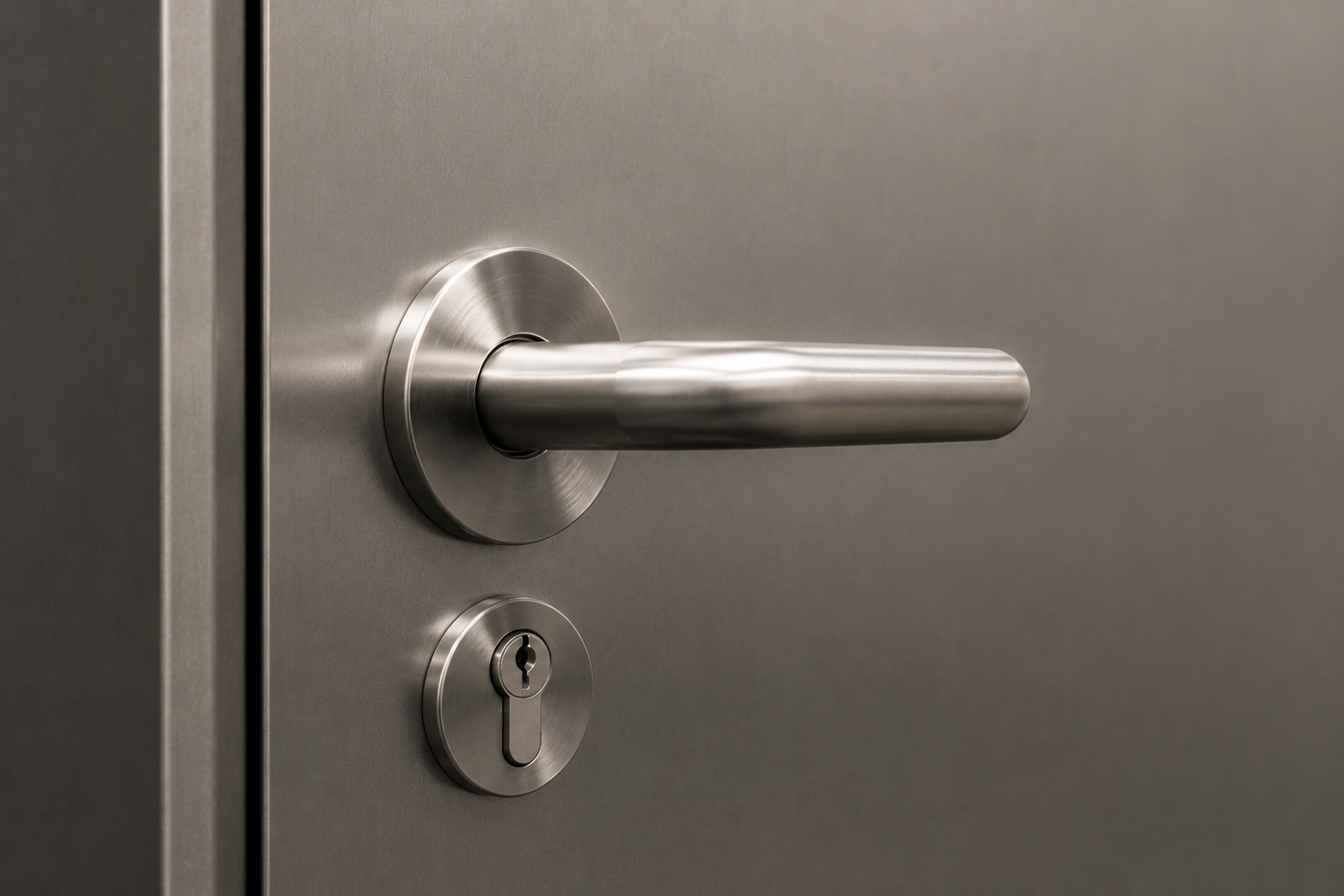
Our new QuietLock® stainless steel range has been engineered specifically for the demands of contemporary commercial specification. Each doorset is supplied as a pre-hung factory assembly – leaf, frame, seals, hinges, and ironmongery adjusted and tested before it leaves the works, so that installation on site is straightforward and performance is preserved.
The QuietLock® range combines:
- Acoustic performance of Rw 42dB at the door, with installed performance from R’w 37dB depending on configuration and flanking conditions
- Fire ratings from EI-30 to EI-60 minutes integrity and insulation, with vision panels available on FD60 doorsets
- Smoke control to C5Sa and C5S200 classifications, suitable for protected escape routes and lobbies
- Security certification to RC3 in accordance with BS EN 1627
- Thermal performance up to a maximum 1.6 U-value, subject to leaf and threshold configuration
- Water tightness rated 4A/6B and air permeability Class 3-4 for external openings
- 63mm stainless steel leaf with mineral wool core, 110mm rebated frame, and a DDA-compliant low profile threshold as standard
Each doorset is supplied with documentation that supports the new regulatory environment including test certification, performance data, and the audit trail that duty holders now need to provide at handover and beyond.
Specifying a Stainless Steel Doorset: What to Get Right
If you’re specifying stainless steel doors on a current or upcoming project, a few things will make the process significantly smoother.
Engage early. The acoustic, fire, and security ratings of a doorset cannot meaningfully be retrofitted later in the project, they need to be considered alongside structural openings, wall build-ups, and adjacent finishes. Bringing a specialist supplier in at RIBA Stage 3 or 4 typically yields the best outcome.
Request full certification at the point of specification. A reputable supplier should be able to provide test evidence for every claimed performance characteristic, acoustic, fire, smoke, security, and thermal supplied as a complete documented package.
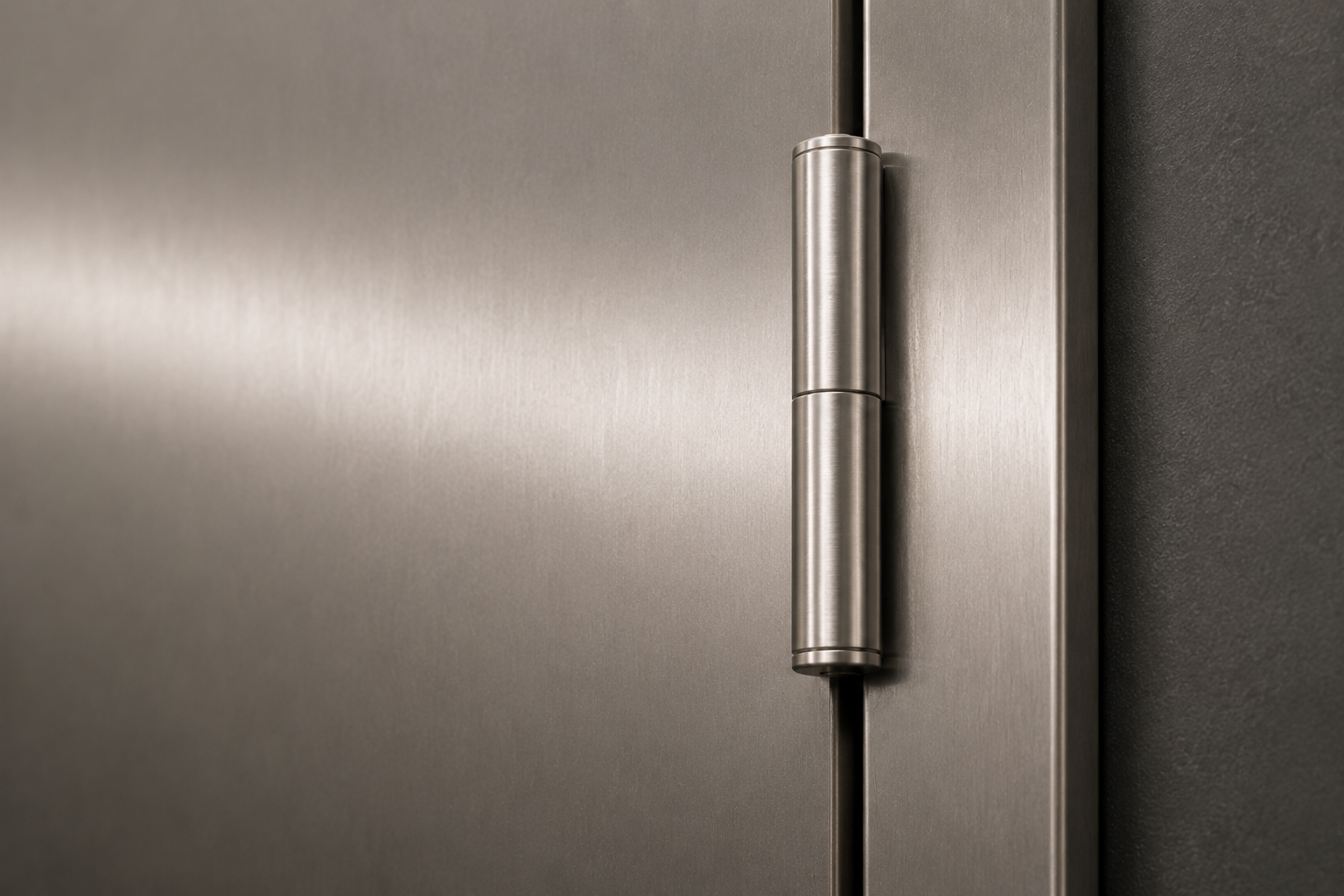
Consider the assembly as a whole. Hardware, hinges, seals, and threshold details all affect performance. A doorset that has been tested as a complete certified assembly is materially more reliable than one assembled from individually compliant components.
Don’t separate aesthetics from performance. The strength of a modern stainless steel doorset is that you don’t have to. Specify the look and the performance together, and choose a manufacturer who can deliver both.
Explore the QuietLock® stainless steel door range
View product details and more on the Stainless Steel Doors page or simply get in touch with us.
Related Services
Learn more about QuietStar’s audiology room design services and how we can support your next project.
Need help with a refurbishment? Explore our audiology room upgrades and acoustic treatment solutions.